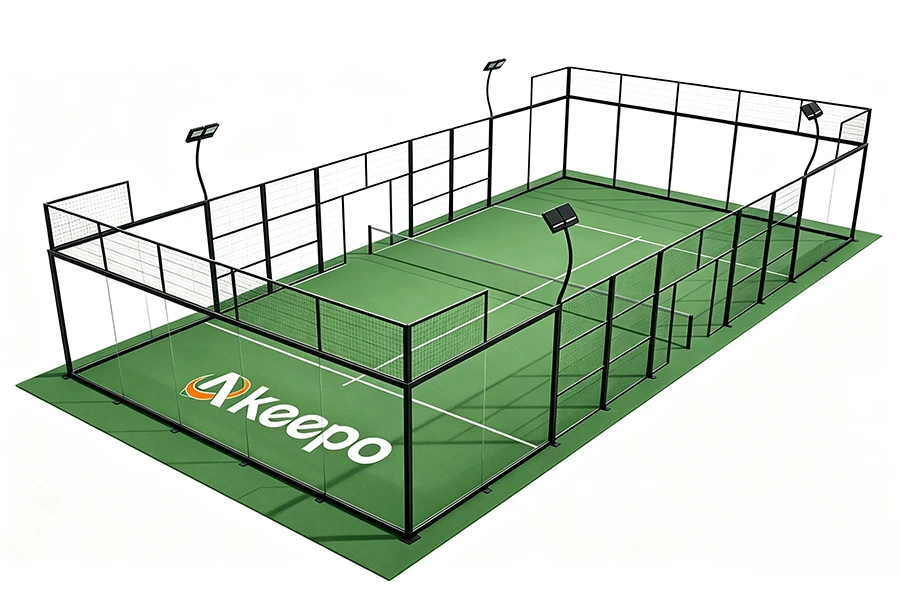
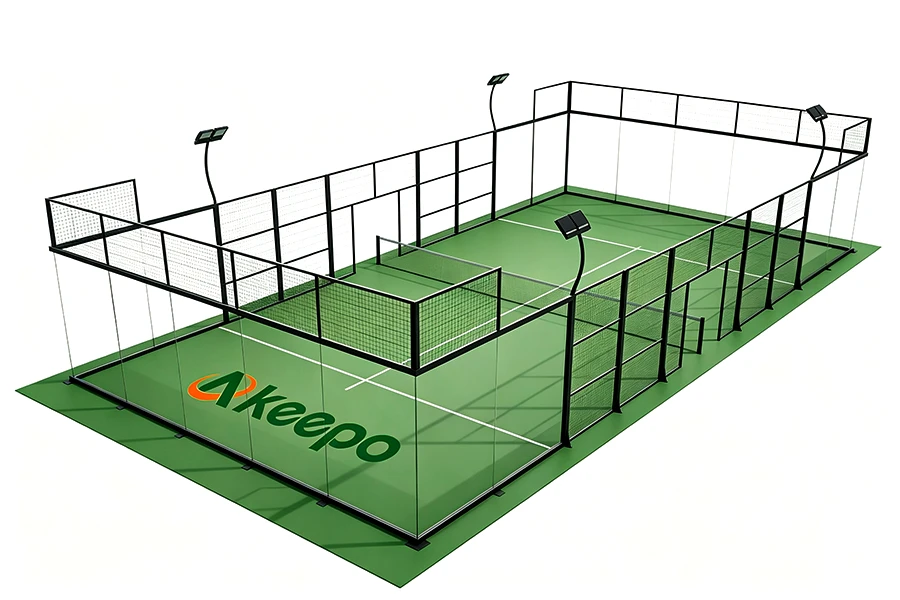
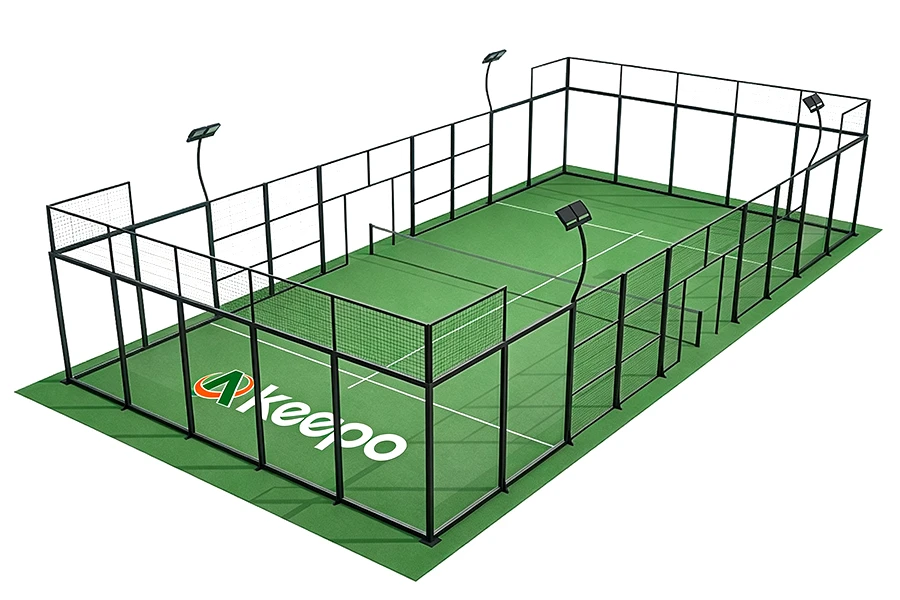
Akeepo believes a great padel court is more than steel, glass, and turf. It is the place where friends meet after work, families spend a weekend afternoon, and a local padel club slowly becomes part of the neighborhood’s padel life. For clubs, schools, resorts, and sports-park developers planning several courts together, a classic padel court needs to be strong, consistent, and easy to maintain.
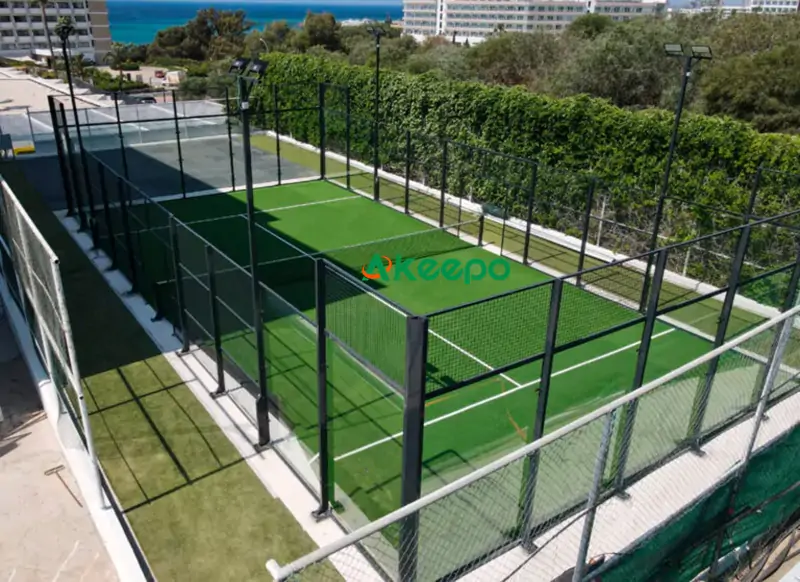
Padel Life Starts with a Reliable Court
Padel is easy to fall in love with. The game is social, fast, and welcoming: most people can enjoy their first rally within minutes, while more experienced players keep coming back for the tactical wall play.
But the experience depends heavily on the padel court itself. A stable structure gives players a consistent ball rebound, a safe playing environment, and the confidence to play hard. That is why Akeepo focuses on a high-strength classic padel court structure designed for long-term outdoor use and multi-court projects.
A standard classic padel court has an internal playing area of 20 meters by 10 meters. The court is enclosed by glass and mesh walls, allowing the ball to remain in play after rebounding from the walls—one of the features that makes padel so distinctive.
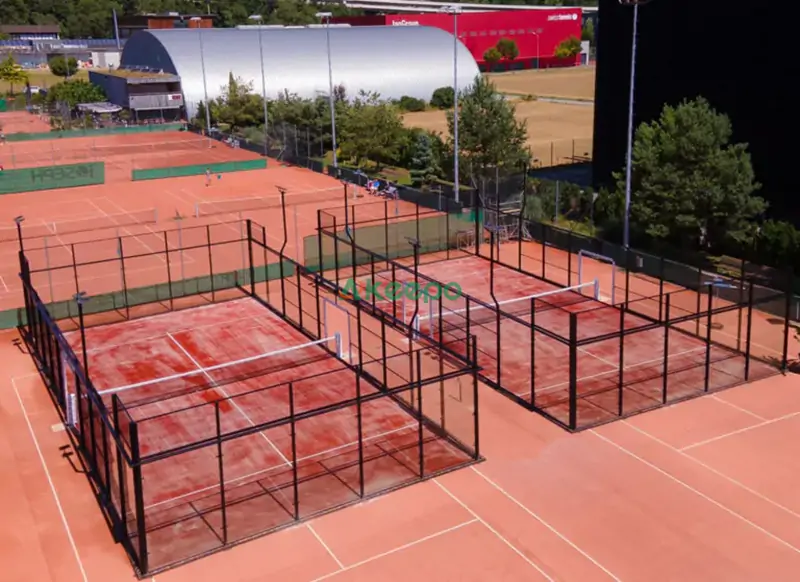
Built for Multi-Court Projects
When a project includes two, four, or even more courts, every detail matters. Courts must be aligned properly, structures must remain stable under frequent use, and materials should support efficient installation.
Akeepo’s classic padel court structure is designed for:
- Multi-court layouts, helping clubs create a professional and organized padel venue.
- High-frequency use, suitable for busy padel clubs, training centers, and community sports parks.
- Outdoor durability, with a steel structure engineered for strength and long-term stability.
- Consistent quality, so every court in the project delivers the same playing experience.
- Efficient project planning, supporting developers who need reliable supply and clear technical specifications.
For outdoor projects, planning space is also important. Construction guidance commonly allows around 20.8 by 10.8 meters for one court, while a two-court layout requires more clearance between playing areas for safety and circulation.
Understanding Basic Padel Rules
A well-built court helps players enjoy the game, but understanding the basic padel rules makes the experience even better.
Padel is usually played as doubles. The serve must be hit underhand after the ball bounces once, and it must land diagonally into the opponent’s service box. After the serve, players can use the glass walls as part of the rally, which creates longer exchanges and more exciting points.
The net is lower than a tennis net—about 0.88 meters at the center—and the enclosed walls are an active part of the game rather than just a boundary. For beginners, the best way to learn is simple: play, laugh, miss a few shots, and let the padel life grow naturally.
A Classic Court for Every Padel Club
For a new padel club, the classic court is often the smartest starting point. It offers the familiar, proven layout that players recognize, while keeping the project practical and scalable.
Akeepo’s classic padel court solution is suitable for:
- Sports clubs expanding from one court to a multi-court center.
- Hotels and resorts adding a premium social activity.
- Schools and universities building recreational sports facilities.
- Real-estate and community projects creating a modern lifestyle destination.
- Contractors and distributors looking for a dependable court-structure supplier.
The goal is not only to build a court, but to create a place where people return every week—book a slot, bring friends, improve their skills, and enjoy the social side of padel.
Akeepo: Strength Behind Every Rally
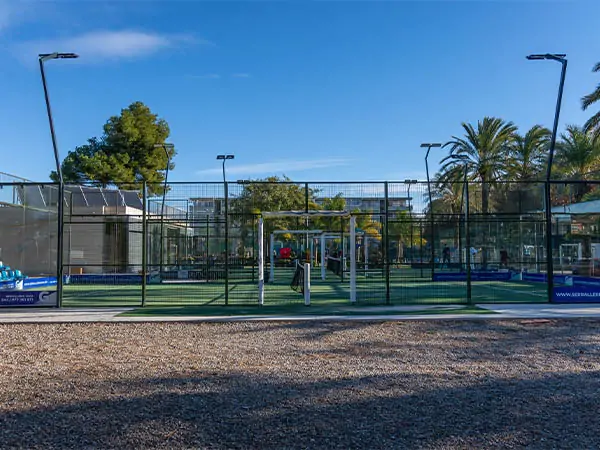
At Akeepo, we see every steel column, glass panel, and mesh section as part of a bigger experience. Our high-strength classic padel court structure is made for projects that need durability, visual clarity, and consistent playability.
Whether you are developing a single community court or a full padel club with multiple courts, Akeepo provides a structure designed to support real daily use and long-term growth.
Akeepo — Building Stronger Courts for a Better Padel Life.
Back to News Start Your ProjectRecommended Products