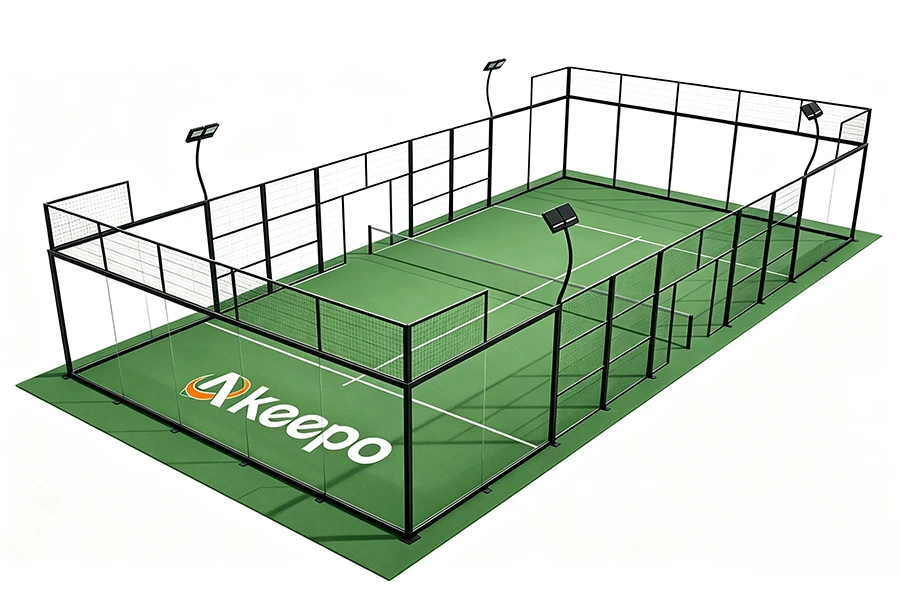
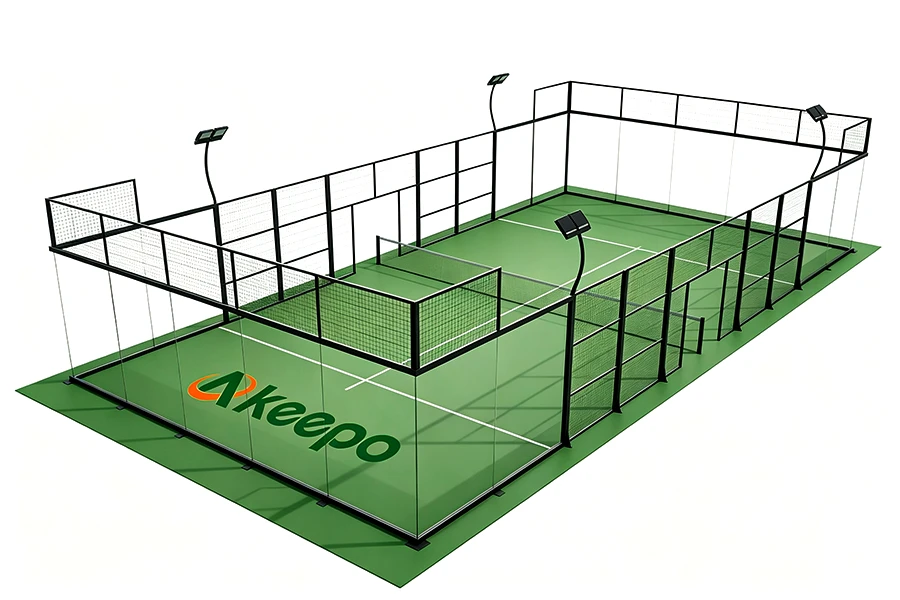
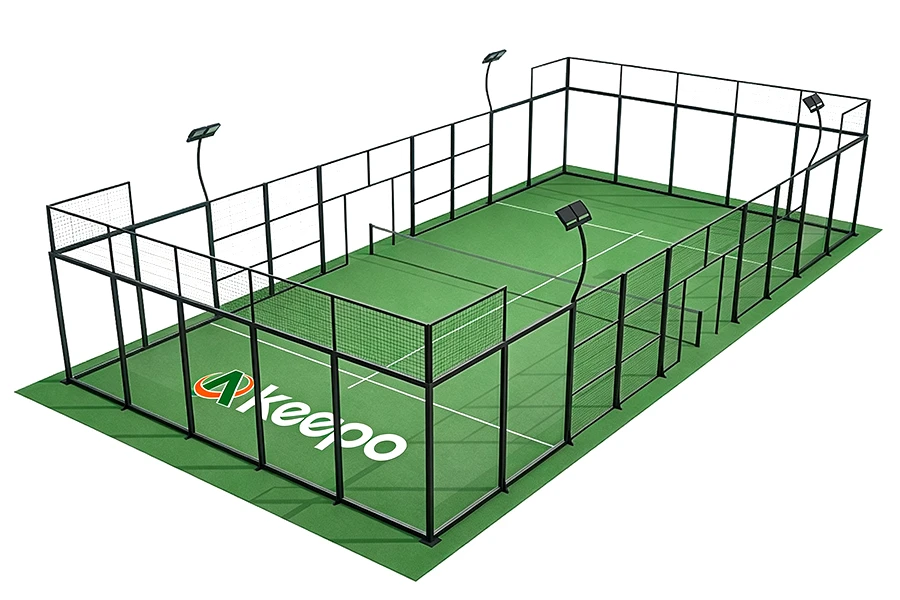
In a fast-growing city in Mexico, a site that was vacant just a few months ago is now one of the most sought-after padel clubs in the area, with padel tennis players competing for prime-time slots. Behind this transformation is a commercial padel court solution from Akeepo — not just supplying a few padel courts, but helping the client turn an investment idea into an operating business.
The Client’s Real Need: Not Just Buying Courts, but Buying “Certainty”
When the client approached Akeepo, they had already done their homework:
- Within a 5 km radius: office buildings, mid-to-high-end residential compounds, and several private schools;
- Limited existing padel sport facilities, with peak hours often fully booked;
- A growing padel tennis culture, but very few truly commercially operated padel clubs.
Their biggest concerns were not “Will anyone play?” but:
- Will quality issues lead to frequent repairs and damage our reputation after opening?
- Will a long construction period tie up capital for too long?
- If we want to add more courts or reconfigure the layout later, will the current structure support it?
Akeepo’s answer was not “Our glass is thicker,” but a complete design philosophy built around “operational certainty.”
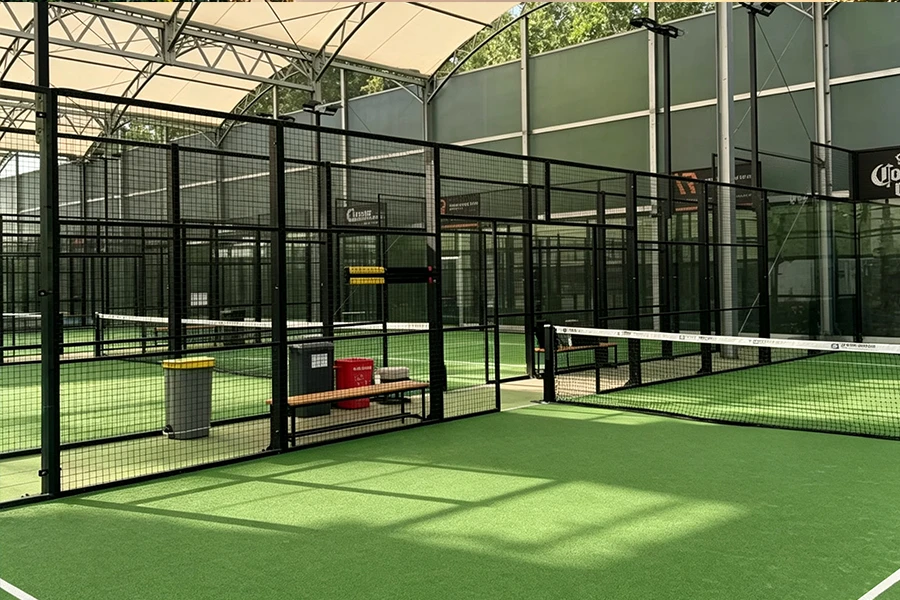
Akeepo’s Approach: Treating Every Padel Court as a “Production Unit”
From Akeepo’s perspective, each padel court is a “production unit” of the padel club — like equipment on a manufacturing line. It needs to be stable, efficient, easy to maintain, and scalable.
1. Using Standardization to Reduce “Surprises”
For the Mexico project, Akeepo deployed its standardized commercial padel court modules:
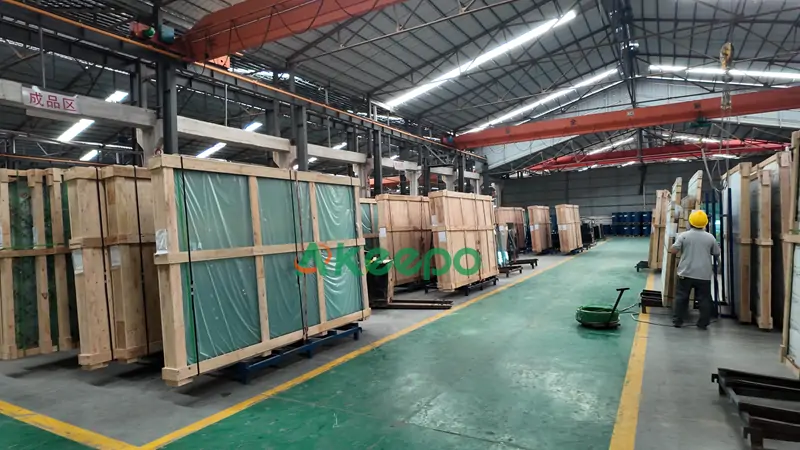
- Most structural components were prefabricated in the factory; on-site work was mainly assembly, minimizing errors from welding and cutting;
- Glass, steel structure, surface, and lighting all had clear technical parameters and acceptance criteria, avoiding the “looks similar, performs very differently” problem;
- For the padel club operator, this meant a more controllable schedule and a ready-to-use template when adding courts or replicating a second club.
2. Designed for Long Hours and High Load
Commercial padel clubs differ from private courts primarily in usage intensity:
- Near full capacity on weekday evenings and throughout weekends;
- Mixed-level players create greater impact on glass, fencing, and surfaces;
- If one padel court goes down for repairs, it directly affects daily revenue and user experience.
In the Mexico project, Akeepo focused on:
- High-impact resistance from 12mm tempered safety glass to reduce breakage risk during intense rallies;
- Fatigue-resistant connections and supports to ensure long-term stability under frequent use;
- Easily replaceable surfaces and localized repair options, allowing the padel club to complete maintenance during off-peak hours instead of shutting down a court for extended periods.
3. Leaving Room to Grow: From One Site Today to a Chain Tomorrow
The client initially planned only a small number of padel courts to test the market, but Akeepo designed the scheme with future expansion in mind:
- A “connectable” site layout makes it possible to add courts later without major reconstruction;
- Power, lighting, and drainage infrastructure were sized for multiple courts, avoiding costly second-phase works;
- For investors aiming to build a chain of padel clubs, this “replicable” design significantly reduces the marginal cost of the second and third locations.
The Result: Not Just “Built,” but “Working Well”
After delivery, the club’s performance exceeded the client’s initial expectations:
- Soon after opening, peak-hour padel court booking rates climbed rapidly, with weekends often fully booked;
- Thanks to stable court quality, no major repairs were needed; daily operations required only basic cleaning and inspections;
- The strong playing experience and visual appeal attracted corporate team-building events, school training sessions, and small tournaments, creating multiple revenue streams for the padel club.
For Akeepo, this was more meaningful than “completing another installation.” It validated a core belief:
A good commercial padel court solution doesn’t just give clients “courts to use”; it gives them “a business that works.”
Akeepo’s Brand Positioning: An “Engineering Partner” Behind Padel Clubs
In a phase of rapid padel sport growth, the market does not lack “padel court sellers.” What’s missing are partners who truly understand the logic of running a padel club. In the Mexico project, Akeepo acted more as an “engineering partner”:
- Providing not just products, but system solutions based on real operational scenarios;
- Focusing not only on the construction phase, but also on long-term maintenance costs and user experience after handover;
- Aiming not to serve a single project, but to grow with clients from single-site operators to multi-club groups.
This is the core message Akeepo wants to communicate:
Back to Cases Start Your ProjectWe are not just padel court manufacturers; we are infrastructure partners helping padel clubs succeed.
Recommended Products