The Grass Is Not Always Greener: Choosing Padel Court Turf That Survives a Decade
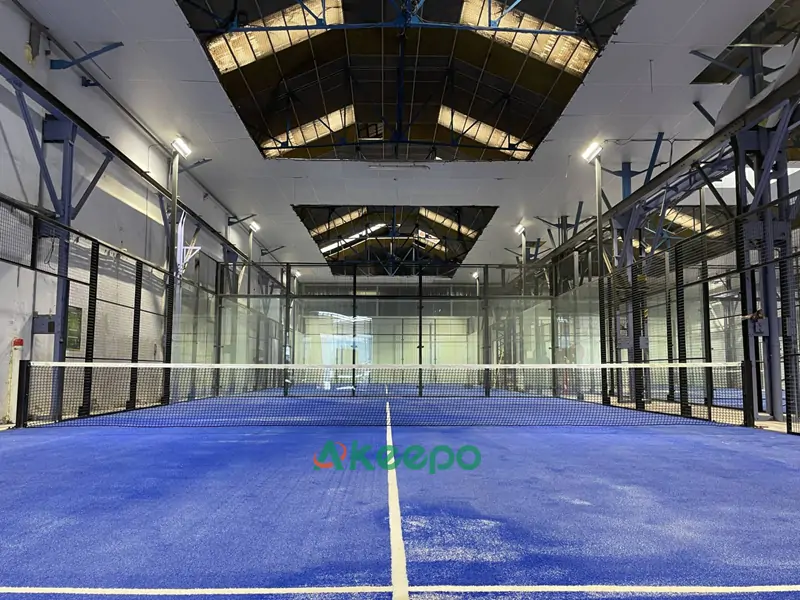
Tournament week made the point better than any brochure. On courts where a professional rally drew 40,000 broadcast viewers, the difference between a clean kick off the back glass and a skidding “dead” bounce was not the players — it was the surface specification and the sand on top of it. For every operator buying a padel court for sale right now, the turf spec sheet deserves the same scrutiny as the steel.
Monofilament vs. Fibrillated: The Yarn Decision
Almost every padel turf on the market is polyethylene, but the way the yarn is made splits the field in two:
· Monofilament turf — each blade is a single, self-supporting fibre (often S- or diamond-profiled for memory). It stands upright, holds its resilience for years and delivers the most consistent ball-bounce. It is the premium choice on FIP-aligned builds.
· Fibrillated turf — a slit film that “opens” into a mesh of connected fibres. It is cheaper and grips sand well at first, but the fibrils progressively split further and flatten under play, so bounce quality drifts within a couple of seasons.
· The honest verdict: fibrillated suits tight budgets and lower-traffic sites; for a commercial club doing 200+ bookings a week, monofilament pays for itself in refurbishment avoided.
The Three Numbers That Actually Matter
Padel turf is deliberately short-pile — nothing like the 40–60 mm carpet on a football pitch. Three figures define performance:
· Pile height: the market standard is 12–15 mm. Shorter pile means faster ball speed and a truer bounce; anything above 15 mm slows the game and traps sand unevenly.
· Stitch density: expect roughly 48,000–84,000 stitches per square metre (typically 10–15 mm stitch length). Higher density with a finer gauge keeps fibres upright under heavy sand and daily play.
· Dtex (yarn thickness): 8,000–12,000 Dtex is the durable range. Very thin yarn looks lush in the showroom and lies flat by month twelve.
The Silica Sand Debate: Filled vs. Dressed
The infill is not decoration — it is the playing system. Washed, rounded silica sand at 0.4–0.8 mm (roughly 40–80 mesh) is worked into the pile to weigh the turf down, keep blades vertical, regulate bounce and pace, and protect the fibre base from UV and stud shear. Two philosophies compete:
· Sand-filled: the pile is completely filled with sand (up to ~9–10 kg/m²). Lowest cost and very stable, but the surface plays slower and fibres spend their life inside an abrasive bed.
· Sand-dressed: about 6–8 kg/m² is brushed in, leaving roughly 60–70% of the pile exposed. This is the tournament feel — faster, drier bounce — and it is the spec Akeepo supplies with its courts, matched to the 15 mm monofilament carpet.
· One warning: never substitute crushed or unwashed sand. Angular grains shred polyethylene fibre like sandpaper, and dust from dirty sand turns a blue court grey in one season.
UV Stability: Where Five-Year Turf Becomes Ten-Year Turf
The fastest way to kill padel turf is not play — it is sunlight. In high-UV markets (southern Spain, the Gulf, Australia), unprotected polyethylene can chalk, fade and powder within 2–3 years. What protects it:
· UV-stabilized masterbatch blended into the yarn, not sprayed on top — ask for the yarn's UV test data (accelerated weathering hours), not just a “UV resistant” stamp.
· Realistic warranty: 5–8 years of product warranty on the carpet is normal for quality monofilament; longer claims usually cover nothing you could actually enforce.
· Water drainage: the backing must drain freely (perforated or needle-punched), or standing water shortens the fibre's life from underneath — which leads neatly into foundations.
The Akeepo Turf Specification Sheet
|
Item |
Akeepo Standard |
Why |
|
Yarn type |
Monofilament, S-profile memory |
Consistent bounce, upright after heavy use |
|
Pile height |
15 mm |
Tournament pace, long service life |
|
Dtex |
~10,000 |
Thick enough to resist flattening |
|
Infill |
Washed rounded silica sand 40–80 mesh, ~7 kg/m² |
Sand-dressed tournament feel |
|
UV package |
Masterbatch-stabilized, 5–8 yr warranty |
Survives high-sunlight markets |
|
Colours |
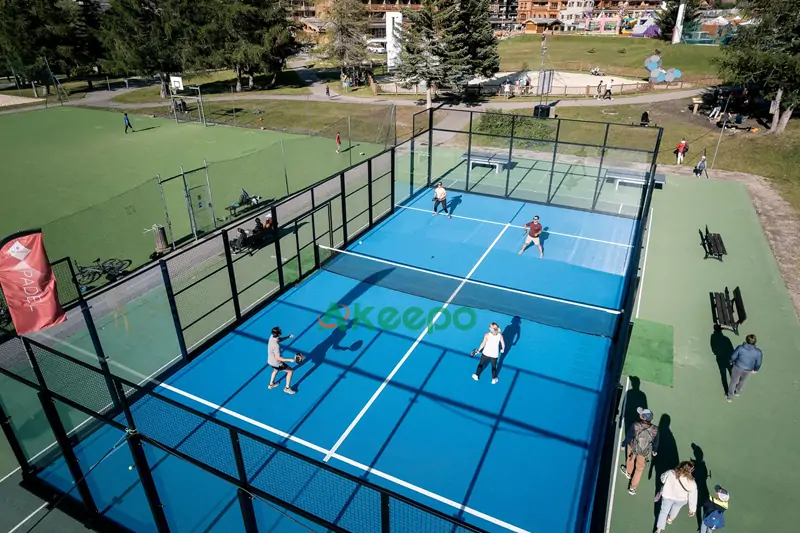
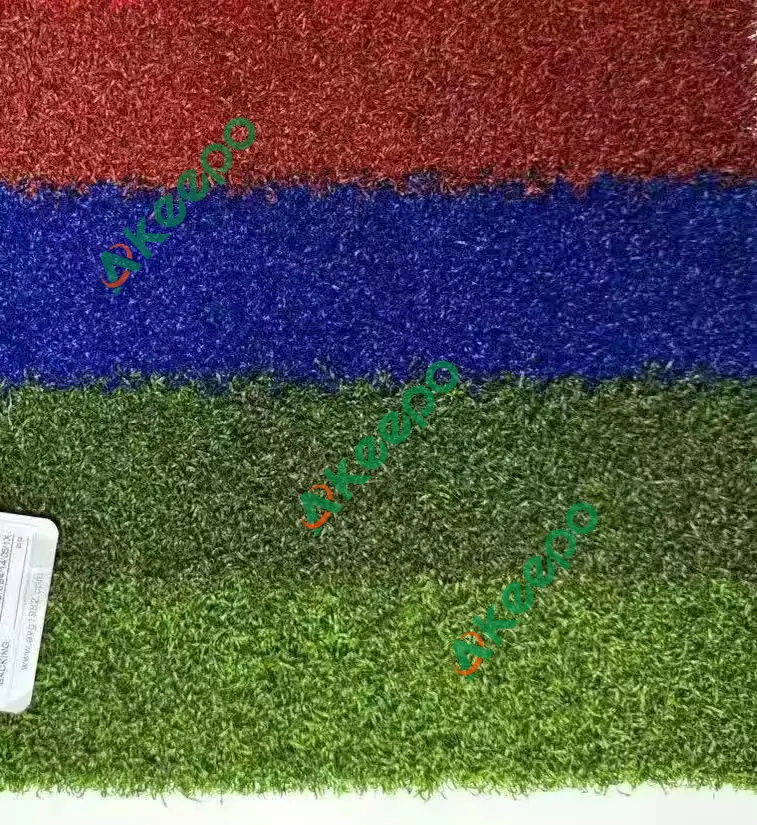
Blue or green, matched lines |
Blue hides sand dust; green is classic |
Akeepo supplies its FIP-compliant courts with monofilament turf and matched washed silica sand as a single system — because the day the surface and the specification arrive from different suppliers is the day the warranty conversation begins. “Trust us” is not a quality system; a spec sheet is.
That covers what players run on. But turf can only be as good as what it lies on: a court's bounce, levelness and drainage are decided 300 mm below the carpet. That's tomorrow.
Back to News Start Your ProjectRecommended Products