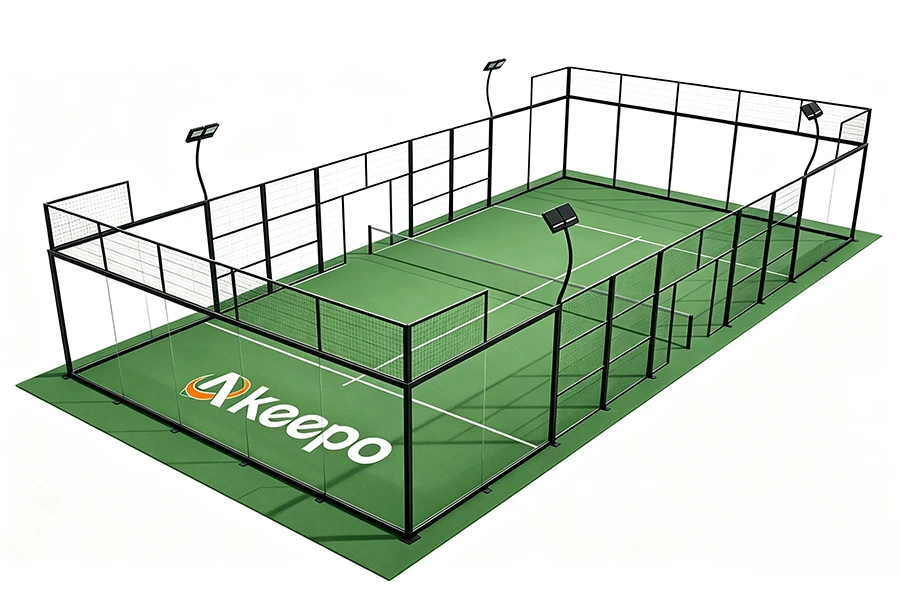
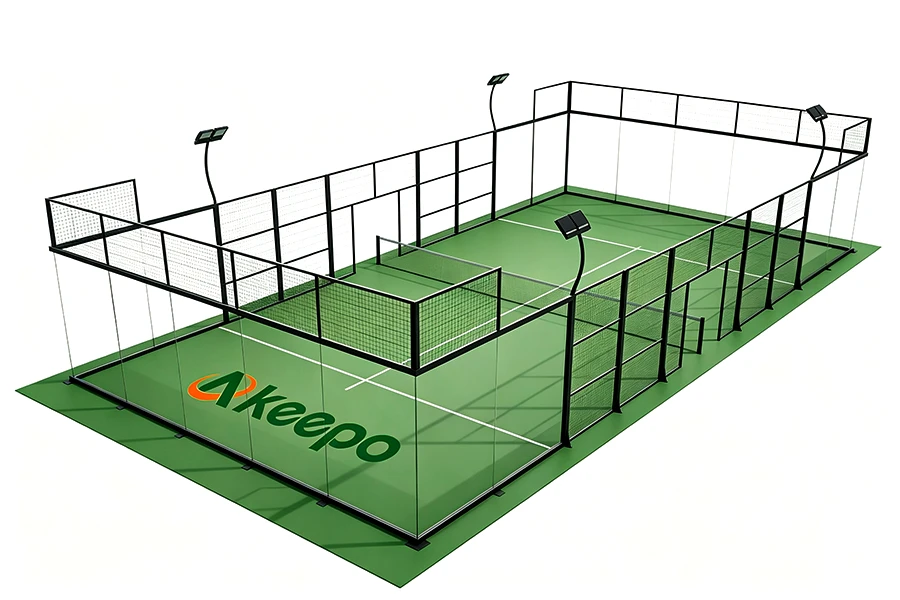
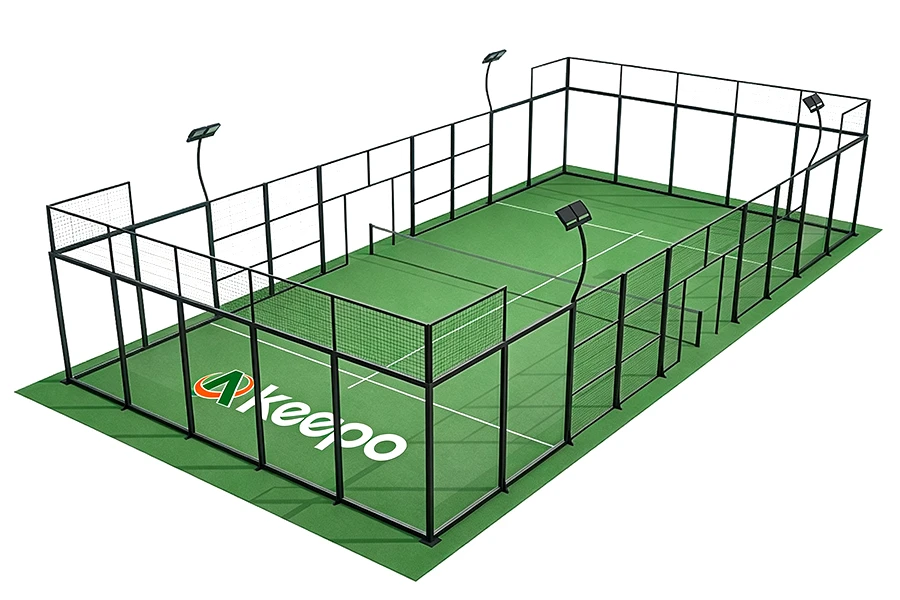
What is Padel?
Padel is a dynamic, social racket sport that blends elements of tennis and squash, played in doubles on a compact, enclosed court. With its underhand serve, wall-rebound tactics, and fast-paced rallies, padel has exploded from a niche pastime into a global phenomenon—creating surging demand for professional padel infrastructure and turnkey padel facility solutions.
For investors, club operators, and sports developers, understanding what is padel—and how to design, customize, and construct a high-performance padel court—is the first step toward capturing this high-growth market. That's where Akeepo, a trusted partner among global padel court builders, delivers end-to-end expertise in court design, court customization, and scalable padel construction.
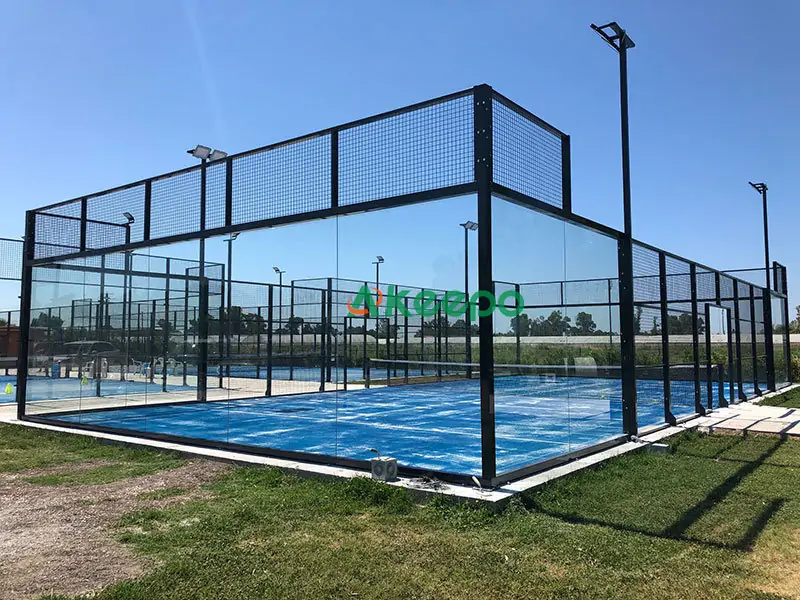
The Basics: Rules, Scoring, and Gameplay
Padel is always played 2 vs. 2 on a rectangular court measuring 20 meters long × 10 meters wide—roughly one-third the size of a tennis court.
Core Rules
- Serve: Underhand only; ball must bounce once before being struck below waist height, then land diagonally in the opponent's service box.
- Wall Play: After the first bounce, the ball may hit glass walls or mesh fencing—but never the mesh directly on serve.
- Scoring: Identical to tennis (15, 30, 40, game); sets won at 6 games (2-game lead), with a 7-point tie-break at 6–6.
- Match Format: Best of 3 sets; professional circuits often use "golden point" at deuce (40–40).
The sport's accessibility—short learning curve, minimal running, and heavy reliance on strategy—makes it ideal for all ages and skill levels, fueling the global padel life movement.[lta.org]
Padel Court Anatomy: Dimensions and Key Components
A regulation padel court is more than just a playing surface—it's an engineered system of glass, steel, turf, and lighting designed for safety, performance, and spectator appeal。
Official Dimensions (FIP Standard)
| Element | Measurement |
|---|---|
| Court Length (internal) | 20 m (±0.5% tolerance) |
| Court Width (internal) | 10 m (±0.5% tolerance) |
| Net Height (center) | 0.88 m |
| Net Height (posts) | 0.92 m |
| Service Line Distance | 6.95 m from net |
| Back Wall Height | 3 m (glass) + 1 m (mesh) |
| Side Wall Height | 3 m tapering to 2 m toward net |
Total footprint (including clearance): ~22 m × 12 m.
Critical Components
- Enclosure: Tempered glass (10–12mm) + galvanized steel mesh for rebound consistency and player safety.
- Surface: UNE 41958 IN-compliant artificial turf with silica sand infill (850–1000kg per court).
- Lighting: 4–8 LED floodlights (≥400 lux recreational; ≥750 lux tournament-grade).
- Foundation: Concrete slab (≥150mm) with 0.5–1% slope for drainage; modular options available for zero-civil-works deployment.
Court Design & Customization: Tailoring Your Padel Facility
Not all padel courts are created equal. Smart operators leverage court design and court customization to differentiate their padel facility and attract premium players, events, and sponsors.
Design Options
- Classic Court: Traditional opaque side walls with glass back panels—cost-effective and widely accepted.
- Panoramic Court: Full-glass side walls for unobstructed spectator views—ideal for tournaments and broadcast.
- Full Panoramic (360°): All-four-sides glass enclosure with no corner posts—maximum aesthetics and VIP experience.
Customization Opportunities
- Branding: Custom colors, logos, and signage on glass, steel frames, and turf.
- Lighting Configurations: Smart LED systems with dimming, scheduling, and energy monitoring.
- Modular Expansion: Design Phase 1 with utility routes and space reserved for future courts (2 → 4 → 8 → 12).
Padel Construction: From Foundation to First Serve
Professional padel construction follows a structured sequence to ensure compliance, durability, and rapid ROI.
Typical Timeline (Traditional Build)
- Site Prep & Foundation (Days 1–14): Excavation, drainage, concrete slab pouring + 3–4 weeks curing.
- Steel Frame Assembly (Days 15–18): Hot-dip galvanized posts and beams, anchored to foundation.
- Glass & Mesh Installation (Days 19–24): 12mm tempered glass panels + galvanized mesh, secured with HILTI anchors.
- Turf, Lighting & Commissioning (Days 25–30): Artificial turf laying, sand infill, LED floodlights, final safety checks.
Zero-Civil-Works Alternative
For faster deployment, modular systems (e.g., Akeepo's 10-day install) eliminate excavation and poured concrete—using prefabricated steel bases and bolt-together components.
Why Partner with Akeepo for Your Padel Project?
As a leading padel court builder and padel infrastructure specialist, Akeepo delivers:
- End-to-End Solutions: From court design and 3D rendering to installation training and after-sales support.
- Certified Quality: All materials comply with FIP, EN, and ISO standards; 15+ year rust-free guarantee on steel frames.
- Scalable Deployment: Modular systems enable phased expansion (2 → 12 courts) without disrupting operations.
- Global Track Record: Projects across Europe, the Middle East, and North America—with full technical documentation and OEM support.
Whether you're launching a boutique padel club, adding courts to an existing sports center, or developing a destination padel facility, Akeepo's expertise in padel construction and court customization ensures your project meets international standards—and exceeds player expectations.
Ready to play padel at the highest level? Explore Akeepo's full range of padel court solutions and start building your padel life legacy today.
🔗 Learn more: https://www.akeepo-padel.com/
Back to News Start Your ProjectRecommended Products