Padel Court Maintenance Guide: A Real-Life Club Example
Many people think that once a padel court is installed, all they need to do is sweep the floor and clean the glass from time to time.
Anyone who runs padel clubs knows that it is not that simple. Players are constantly running, stopping, turning and diving. Balls hit the glass, shoes move the sand, and rain, dust and leaves slowly affect the court. At first, these changes may not be obvious. After a few months, however, the artificial turf, sand infill, net, drainage and metal frame can all show signs of wear.
The following example is based on a typical four-court padel club and shows what daily padel court maintenance looks like in practice. Akeepo also recommends using a similar routine to keep every court safe, clean and ready for play.
The First Few Months
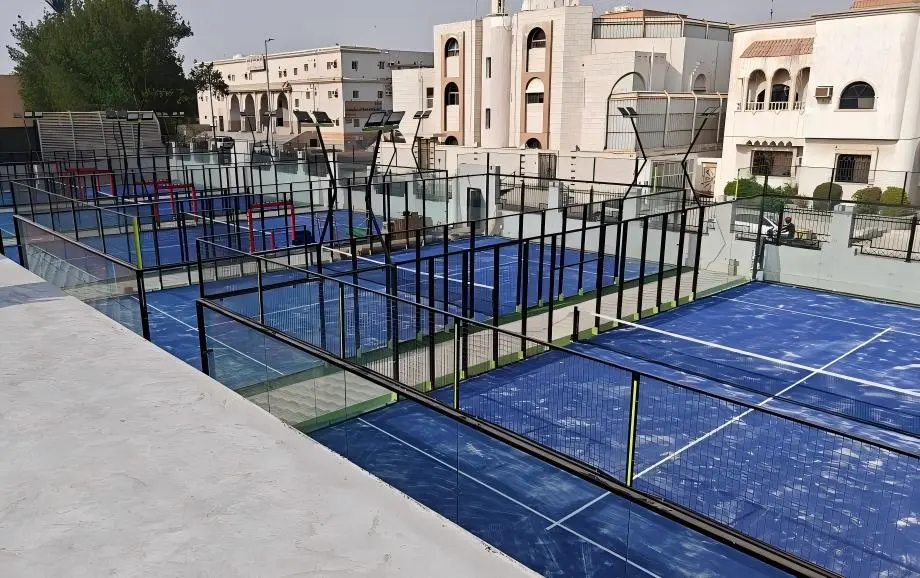
The club has four outdoor padel courts. It opens at 8:00 a.m. and closes at 11:00 p.m. During weekdays, each court is used for around six to eight hours. At weekends, most courts are booked almost continuously.
When the club first opened, everything looked perfect:
- The artificial turf was even and bright.
- The glass panels were clean and clear.
- The net was properly tensioned.
- The drainage system worked well.
- The metal frames and doors were secure.
At first, the staff only removed leaves and rubbish every day and cleaned the glass occasionally. Since the courts were still new, they did not think regular maintenance was necessary.
After about six months, the first problems began to appear.
Players Felt the Court Was Slippery
The first complaints came from regular players.
Several players said that the area near the baseline felt slightly slippery when they stopped suddenly. Some also noticed that the area near the net felt harder than before.
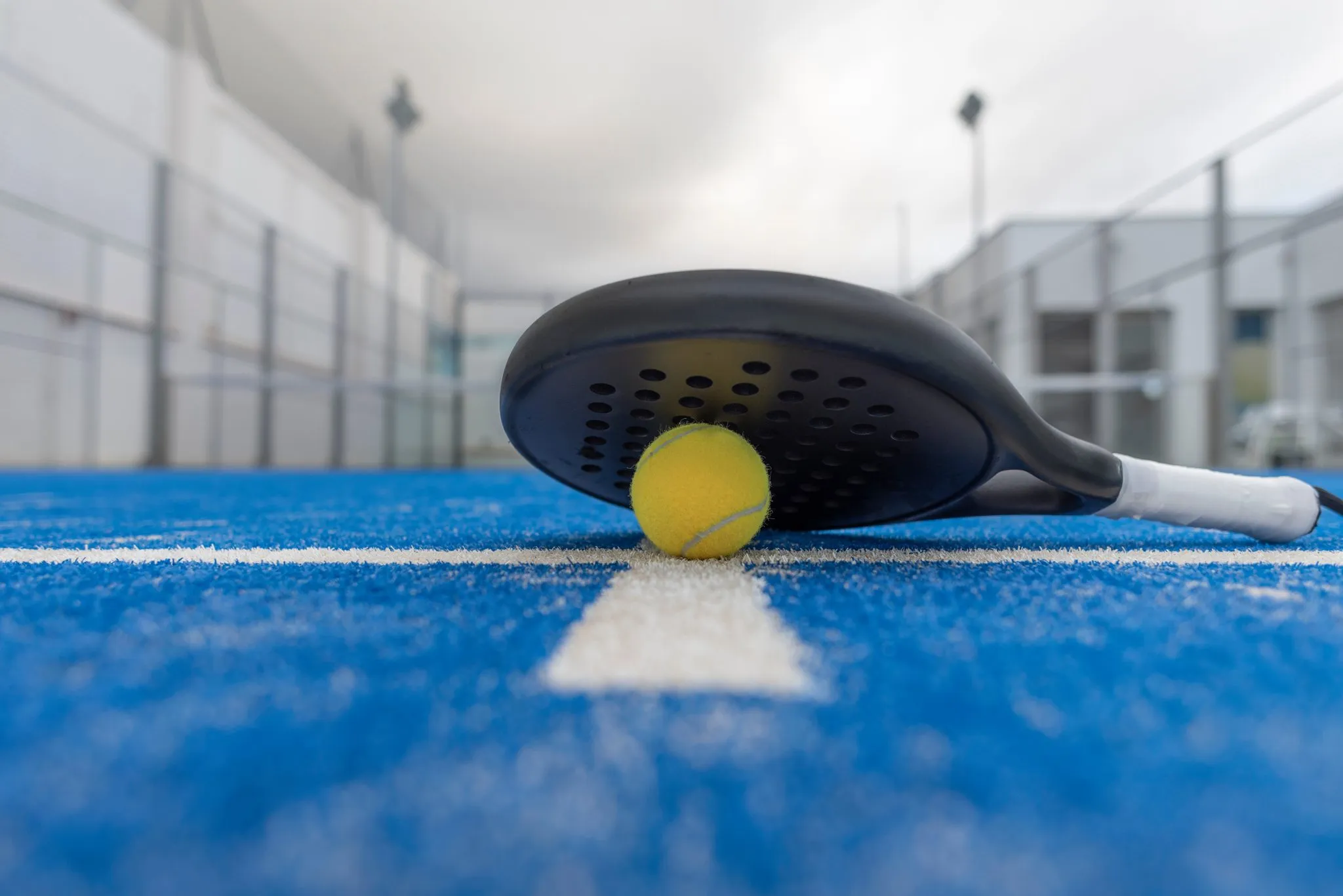
The staff inspected the surface and found that the sand infill was no longer evenly distributed.
During serves, quick turns and sudden stops, players naturally move sand from the baseline towards the net and the corners. Over time, the baseline area loses sand, while the net area and corners collect too much.
The turf fibres were also beginning to lean in the same direction because the surface had not been brushed regularly.
How the Club Solved It
The staff first removed leaves, rubbish and small stones from the court. They then used a soft brush to lift the turf fibres and redistribute the sand.
The baseline, corners and entrance areas received extra attention because these areas experienced the most foot traffic. After brushing, the staff checked the sand level and added a small amount of infill where necessary.
This job may look simple, but the wrong brush or too much pressure can damage the turf. Regular brushing helps keep the fibres upright and distributes the infill more evenly across the court.
The Glass Became Dirty
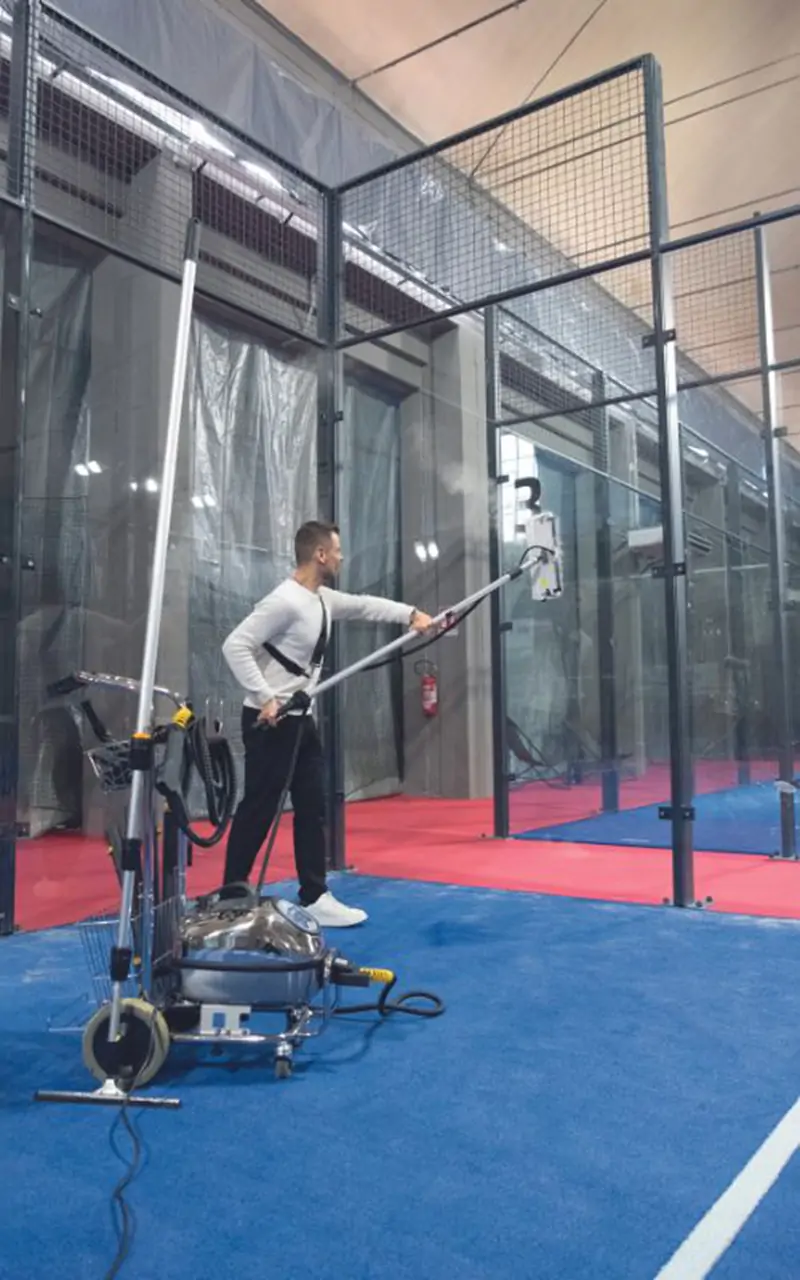
During the first few months, the club cleaned the glass once a month. It soon became clear that this was not enough.
Players regularly touched the glass, leaving fingerprints, sweat marks and ball marks. Rain left water stains, while the lower sections collected mud, sand and grass.
Dirty glass affected the players’ view, especially during fast rallies. It also made the entire padel court look less professional.
The club changed its cleaning schedule to once every two weeks. After busy weekend events, the staff also carried out a quick spot clean.
Their cleaning process was simple:
- Remove dust and sand with a soft cloth.
- Apply a neutral glass cleaner to ball marks and fingerprints.
- Clean the panel from top to bottom with a rubber squeegee.
- Wipe the corners and glass fittings with a microfiber cloth.
The staff avoided wire brushes, rough scouring pads and sharp tools because these can scratch the glass. Strong acidic or alkaline products were also avoided because they may damage the glass fittings and metal parts.
A Heavy Rainstorm Revealed a Drainage Problem
The club paid more attention to maintenance after a heavy rainstorm.
When the rain stopped, a small area near the entrance of Court 3 was still covered with water. At first, the staff thought the problem was caused by the unusually heavy rain. The next day, however, some water was still there.
After opening the drainage channel, they found leaves, mud and grass clippings blocking the outlet. Some sand infill had also been washed towards the drain and reduced the water flow.
Once the drainage channel was cleaned, the problem improved quickly. From then on, the club included drainage checks in its monthly maintenance plan and inspected the drains after storms and windy days.
For an outdoor padel court, rain itself is not usually the main problem. Poor drainage is. Standing water can lead to mould, loose turf joints and faster corrosion of the metal structure.
The Net Started to Sag
After several months of use, the staff noticed that the net on two courts had started to sag in the middle. Some screws around the entrance doors were also becoming loose, and a few metal parts showed light surface rust.
The staff adjusted the net tension and checked whether the posts were still stable. They also tightened the door screws and cleaned the rusty areas before applying a protective treatment.
These are small jobs, but they are important. If they are ignored, the club may eventually need to replace the net, door frame or part of the fencing.
The Club’s New Maintenance Schedule
After this experience, the club stopped waiting for problems to appear. It introduced a simple maintenance schedule:
| Frequency | Maintenance work |
|---|---|
| Every day before opening | Remove leaves, rubbish and stones; check the glass and net |
| Once a week | Brush the artificial turf and check the sand distribution |
| Every two weeks | Clean the glass, doors and metal fencing |
| Once a month | Check screws, fittings, lighting and drainage |
| After heavy rain | Check standing water, drains and turf joints |
| Every 6–12 months | Carry out deep cleaning, sand top-up and a full inspection |
Courts with very high usage may need to be brushed more than once a week. Courts with lighter use can follow a longer schedule, but daily cleaning and basic safety checks should never be skipped.
A Simple Habit That Helped
The club also asked staff to take a few photos after each maintenance session and record any problems they found.
For example:
- Which court had the most turf wear.
- Which corner collected the most sand.
- Which glass panels needed extra cleaning.
- Which screws had been tightened.
- Where standing water appeared after heavy rain.
This small habit made maintenance much easier to manage. The club could see repeated problems and prepare materials or repairs in advance, instead of waiting for players to complain about a slippery surface or dirty glass.
Akeepo’s Practical Advice
Akeepo believes that padel court maintenance does not need to be complicated. The important thing is to make it regular.
Spend a few minutes every day removing rubbish and checking the court. Brush the artificial turf every week. Inspect the structure and drainage once a month. These simple steps can prevent much more expensive repairs later.
A well-maintained padel court gives players a better experience:
- More stable movement.
- More consistent ball bounce.
- Clearer glass.
- Better net height and tension.
- Faster recovery after rain.
- A more comfortable padel life.
A court will not remain exactly the same as it was on its opening day. However, with proper care, the turf, glass, fencing and other components can continue to perform well for a long time.
Back to News Start Your Project
Recommended Products